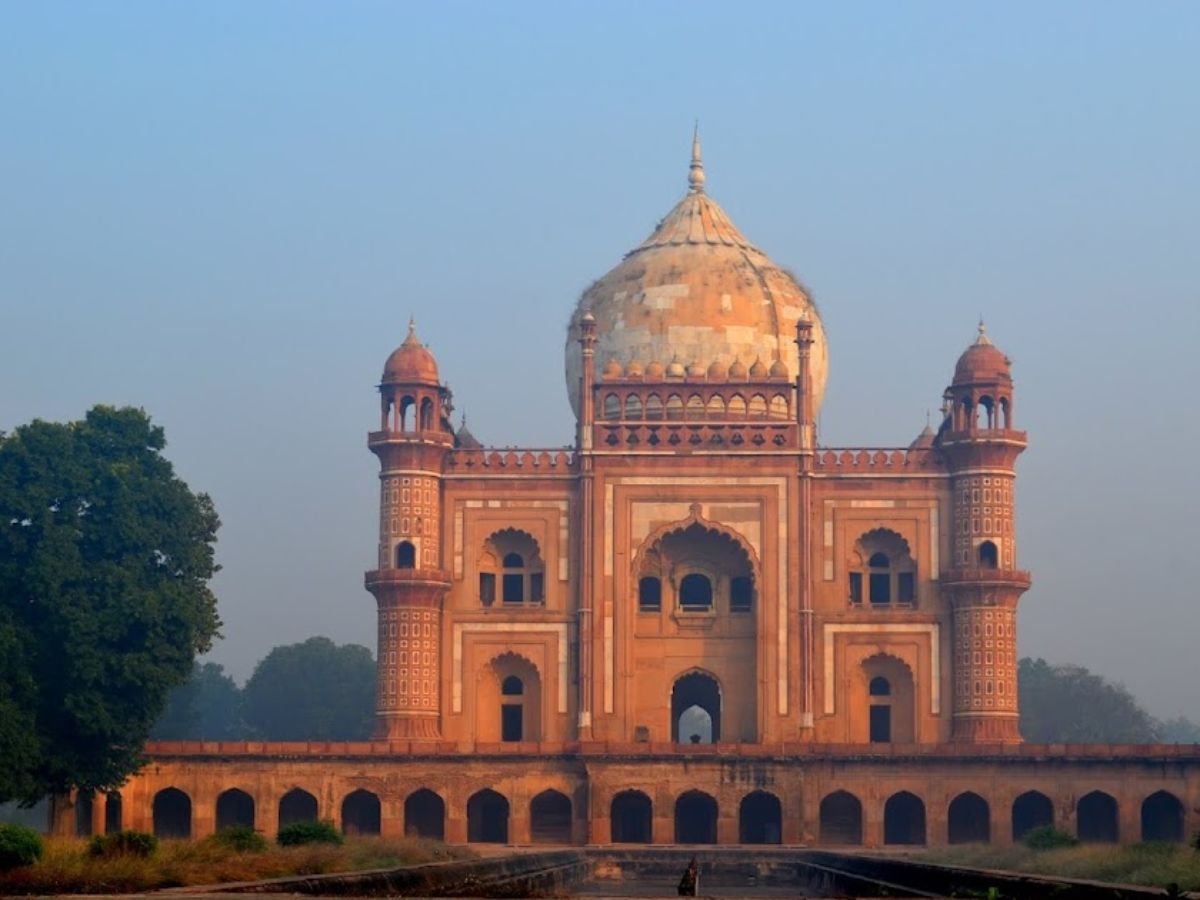
Farrukhnagar is a small heritage town in the Gurugram district of Haryana, roughly 25 km from Gurugram city. Established in the 18th century and once a prosperous salt-trading centre, it still carries a palace, a stepwell, a mosque and the gateways of an old walled town from that period. This guide covers the places to visit in Farrukhnagar, what each spot is actually like, and how to plan a relaxed day trip.
🏛️ 18th-century heritage town🧂 Historic salt-trading centre🚗 ~25 km from Gurugram🐦 Sultanpur National Park nearby
🗓️ Information last reviewed: 2026
What are the best places to visit in Farrukhnagar?
The main places to visit in Farrukhnagar are the Sheesh Mahal, the Baoli Ghaus Ali Shah stepwell, the Jama Masjid in the main market, and the surviving gateways of the old walled town such as the Delhi Gate and Jhajjar Gate. Just outside town, Sultanpur National Park — about 10 km away — is a major draw for birdwatchers in winter. Most visitors cover Farrukhnagar in half a day and pair it with Sultanpur for a full outing.
About Farrukhnagar: a quick overview
Farrukhnagar is a town in the Gurugram district of Haryana, on the western side of Gurugram city and well within Delhi NCR. It was established in 1732 by Dalel Khan, a governor under Mughal rule who came to be known as Faujdar Khan, and the town takes its name from the then Mughal emperor, Farrukhsiyar.
What put Farrukhnagar on the map was salt. Brine drawn from wells in the villages around the town was processed into salt, and that trade made Farrukhnagar a busy commercial centre through the 18th and 19th centuries. The monuments you see today — the palace, the stepwell, the mosque and the gateways of the walled town — belong to that era. The trade declined after the British shut down salt production here in the late 19th century, and the town settled back into being a quiet market town.
That history is exactly why it is worth a visit. Farrukhnagar has little in the way of tourist infrastructure, and that is part of its appeal: you see 18th-century monuments in a working town, with daily life carrying on around them. It works well as a short outing from Gurugram, Manesar or Delhi, and it combines easily with Sultanpur National Park a short drive away.
Places to Visit in Farrukhnagar
Everything worth seeing in Farrukhnagar sits within a compact area around the old town, so the sights are easy to cover on foot with short drives in between. Below are the spots people actually come for, what each one is like, and who it suits best.
The double-storeyed Sheesh Mahal, Farrukhnagar's best-known monument.
1 Sheesh Mahal
The Sheesh Mahal is the best-known monument in Farrukhnagar — a double-storeyed palace of red sandstone, Mughal brick and Jhajjar stone, built for the town's founder, Faujdar Khan, in the 18th century. Its name translates to "palace of mirrors", a reference to the mirror work its interiors are said to have once carried. The building has arched verandas on both floors, decorative plasterwork and a long facade that faces a dry water channel in front.
The palace remained in use until 1857, after which it fell into disrepair. Much of it is weathered today, but the facade, the arches and the sheer scale of the building still make it the most rewarding stop in town — and one of the more underrated heritage sites in the Gurugram district.
Best for: history loversPhotographyFirst-time visitors
Practical tip: the palace sits in the middle of the old town, so the last stretch is usually on foot through narrow lanes. Keep aside 30–45 minutes.
Baoli Ghaus Ali Shah, locally known as the Gol Baoli for its octagonal shape.
2 Baoli Ghaus Ali Shah (Gol Baoli)
Baoli Ghaus Ali Shah is an 18th-century stepwell built by Ghaus Ali Shah, a local chieftain of the time. Locals often call it the Gol Baoli because of its unusual octagonal shape — most stepwells are long and linear, while this one wraps around an octagonal well, with arched corridors and stairways descending towards the water. It stands on the Farrukhnagar–Jhajjar road side of town.
The stepwell is dry these days, but the geometry and stonework are intact enough to give you a real sense of the engineering, and the morning light across the arches makes it a good photography stop. It is one of the more distinctive heritage structures in the Gurugram region.
Best for: photographyHeritage enthusiastsQuiet stops
Practical tip: allow 20–30 minutes. There is little shade around, so it is more comfortable in the early morning or late afternoon.
3 Jama Masjid
The Jama Masjid in the town's main market was also built by Faujdar Khan and was once part of the walled city. It sits close to the Sheesh Mahal, and its arched openings and old stone work are among the most photographed features of the old town. Being in the middle of a functioning market, it is best experienced as part of a walk through the bazaar rather than as a standalone stop.
Best for: heritage & architectureOld-town walk
Practical tip: allow 15–30 minutes, and dress and move respectfully — the area around the mosque is part of everyday town life.
4 The Old Fort Gates — Delhi Gate & Jhajjar Gate
Farrukhnagar grew as a fortified, walled town, and a set of gateways regulated movement in and out of it. The best-known survivors are the Delhi Gate (Dilli Darwaza) and the Jhajjar Gate, which faces the road towards Jhajjar. Neither takes long to see, and they combine naturally with a walk through the old lanes — the walls themselves have largely disappeared, but the gates give you a feel for the town's original shape and scale.
Best for: history buffsShort walks
Practical tip: around 20–30 minutes is enough for both gates if you are walking the old town anyway.
5 The Old Bazaar and Town Walk
Beyond the individual monuments, the simplest way to experience Farrukhnagar is to walk the old market lanes around the Sheesh Mahal. The walled town's basic layout survives, and the bazaar still serves the surrounding countryside, so you see the monuments in their living context rather than as fenced-off exhibits. Old havelis and period structures turn up along the way for those who keep an eye out.
Best for: slow travelLocal culture
Practical tip: 30–60 minutes for an unhurried loop, ideally combined with stops 1, 3 and 4 above.
6 Sultanpur National Park (about 10 km)
Technically outside Farrukhnagar, Sultanpur National Park is close enough that most visitors pair the two in a single outing. The park is one of the Delhi NCR's best-known birdwatching spots, with the winter months bringing in migratory species alongside the resident birds. Paths around the lake make it an easy, flat walk suitable for families.
Best for: birdwatchingFamiliesNature
Practical tip: timings are commonly reported as 7:00 am to 4:30 pm, closed on Tuesdays, but entry rules and timings change — confirm the current status before you plan around it. Winter (December–February) is the most rewarding season.
Historical and Cultural Side of Farrukhnagar
Farrukhnagar's story is unusual for a small Haryana town. Founded in 1732 under Mughal rule, it grew wealthy on salt: brine from wells in the surrounding villages was processed and traded through the town, and the revenue paid for the palace, the stepwell, the mosque and the fortified walls whose gateways still stand.
The town changed hands through the political upheavals of the 18th century, and its monuments were in use until the 1857 uprising, after which their fortunes declined. The salt trade itself was wound up by the British in the late 19th century once new salt sources elsewhere made it unviable. A railway branch line to Garhi Harsaru junction — built during the colonial era largely to carry salt — remains in limited use, and a small station still connects the town to the main line.
Today, that layered past is the town's main draw. The monuments are not restored museum pieces; they sit inside a living market town, which is precisely what a short heritage outing here feels like.
Things to Do in Farrukhnagar
Farrukhnagar is not an activity destination — it is a place to slow down for a few hours. These are the things that genuinely work here:
Do a self-guided heritage walk linking the Sheesh Mahal, Jama Masjid, the old gates and the baoli — the town is compact enough to cover on foot.
Photograph the stepwell and the palace arches; morning light is the most flattering, and the octagonal baoli is a rare shape for the region.
Walk the old bazaar and try the local snacks and tea stalls around the main market.
Go birdwatching at Sultanpur National Park, about 10 km away, if you are visiting between October and March.
Combine it with a drive through the countryside on the Gurugram–Farrukhnagar or Farrukhnagar–Jhajjar roads.
For groups planning a longer outdoor day around the region, our guide to picnic spots near Manesar covers the popular day-outing options within easy driving distance.
Best Time to Visit Farrukhnagar
October to March is the best window. Daytime temperatures on the NCR plains are comfortable through these months, the walking is pleasant, and it coincides with the birding season at Sultanpur National Park — December and February are the peak months for migratory birds there.
April to June is very hot, with summer temperatures in Haryana often making midday sightseeing uncomfortable; if you visit then, go early morning. The monsoon months (July–September) bring humidity and patchy rain, though the surrounding countryside turns green.
Seasonal conditions change year to year; treat the above as general guidance and check the weather before you travel.
How to Reach Farrukhnagar?
Farrukhnagar is easy to reach from anywhere in Delhi NCR by road. Here is the practical picture.
Mode
Detail
By road
Farrukhnagar is roughly 25 km from Gurugram city and about 22 km from Manesar by road, connected via the Gurugram Road and the Farukh Nagar–Wazirpur road. The town also lies close to the KMP (Western Peripheral) Expressway, which links it to the wider NCR road network.
By rail
Farrukhnagar has a small station on a branch line from Garhi Harsaru Junction, originally built during the colonial era largely to carry salt. Services are limited, so most visitors arrive by road; Garhi Harsaru, on the main Delhi–Rewari line, is the nearest major junction.
By bus & taxi
Local buses and shared transport run between Gurugram and Farrukhnagar. App-based cabs and private taxis from Gurugram, Manesar or Delhi are the easiest option for a day trip.
By air
The nearest major airport is Indira Gandhi International Airport, Delhi. A cab is the simplest onward option.
Self-driving is the most flexible choice, because it lets you combine Farrukhnagar's old town with Sultanpur National Park in a single outing without waiting on transport.
Explore Around Farrukhnagar
Places to Visit Near Farrukhnagar
Farrukhnagar sits on the quieter western side of Gurugram district, with several rewarding destinations within an easy drive — from a national park and a lake to historic towns and the main NCR cities.
🐦
01
Sultanpur National Park
About 10 km from Farrukhnagar, this is one of the Delhi NCR's best-known birdwatching destinations, at its best between October and March when migratory birds arrive at the lake.
Roughly 25 km away, Gurugram covers the modern side of the district — malls, dining, entertainment and city attractions — an easy contrast to Farrukhnagar's old-town pace.
Rewari, further to the south-west, is another option for a heritage detour if you are extending your drive. Other nearby destinations — including Manesar, Gurgaon, Dharuhera and Bahadurgarh — are covered in our individual destination guides as they go live.
Where to Stay Around Farrukhnagar?
Farrukhnagar is a small town and most visitors see it as a day trip rather than an overnight stay. If you do want to stay over, options in the town itself are limited, so it usually makes sense to base yourself in nearby Manesar or Gurugram.
Frequently Asked Questions About Places to Visit in Farrukhnagar
The main places are the Sheesh Mahal, the Baoli Ghaus Ali Shah stepwell, the Jama Masjid in the main market, and the surviving old town gates such as the Delhi Gate and Jhajjar Gate. About 10 km away, Sultanpur National Park pairs naturally with the town for a full day out.
Farrukhnagar is known as an 18th-century salt-trading town. Founded in 1732 under Mughal rule, it grew wealthy processing and trading salt from brine wells in the surrounding villages, and its monuments — the Sheesh Mahal, the baoli, the Jama Masjid and the walled town's gateways — date from that period.
Yes. Farrukhnagar is a comfortable day trip from Gurugram, Manesar or Delhi. The town's sights fit into about half a day, and adding Sultanpur National Park — roughly 10 km away — turns it into a full and well-balanced outing.
The key historical places are the Sheesh Mahal palace built for the town's founder Faujdar Khan, the 18th-century Baoli Ghaus Ali Shah stepwell, the Jama Masjid in the main market, and the surviving gateways of the old walled town, including the Delhi Gate and the Jhajjar Gate.
By road, Farrukhnagar is roughly 25 km from Gurugram and about 22 km from Manesar, connected via the Gurugram Road and the Farukh Nagar–Wazirpur road. Local buses run on the route, but a cab or self-drive car is the easiest option, and the town also lies close to the KMP Expressway.
October to March is the most pleasant, with comfortable temperatures for walking the old town. Winter is also the best season for birdwatching at Sultanpur National Park nearby. Summers (April–June) are very hot, and the monsoon months bring humidity.
Sultanpur National Park (about 10 km) is the closest major attraction. Further afield, you can combine the town with Sohna's hot springs and hill fort, Damdama Lake, Gurugram's city attractions, or the monument trail in Delhi — all within day-trip distance by road.
Half a day is enough for the town itself — the Sheesh Mahal, the baoli, the Jama Masjid, the old gates and a walk through the bazaar. With Sultanpur National Park added in winter, plan for a full day.
Planning a Visit to Farrukhnagar
Farrukhnagar suits travellers who prefer substance over spectacle: a compact heritage town where a palace, a stepwell, a mosque and old gateways can all be seen in a few unhurried hours, without crowds or commercialisation. Pair it with Sultanpur National Park in winter, base yourself in Manesar or Gurugram, and you have one of the easier and more rewarding heritage outings in the Gurugram district.
This is an independent informational guide. Distances, timings and facilities are based on publicly available information and general sources, and can change — please confirm details locally before you travel.