Hotel ballrooms and halls
Air-conditioned and easy to control for sound and lighting. Suited to unveilings, press interaction and seated presentations where weather should not be a variable.
Corporate Events · Manesar, Gurugram
A product launch asks more of a venue than a party does. Every guest needs to see the stage, the screens and sound system need clean power, the product itself needs space to be displayed, and the entry should not bottleneck at the gate. This guide covers the product launch venues in Manesar you can realistically work with, what each format suits, and the questions to settle before you pay an advance.
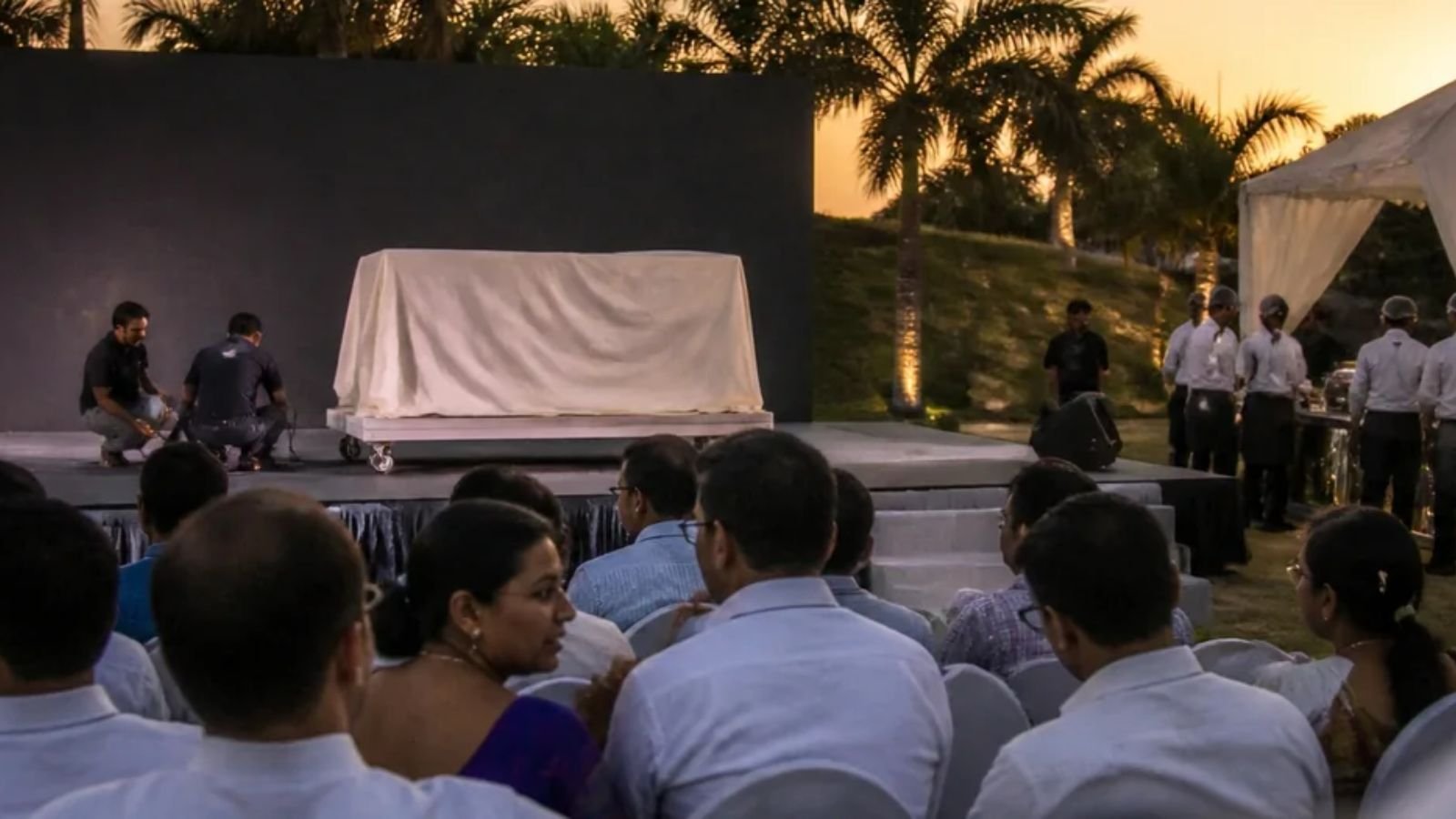
Manesar sits on the NH-48 corridor in Gurugram district, next to the IMT Manesar industrial belt and a straightforward drive from Gurgaon and Delhi. Launch venues here are mainly hotel ballrooms, resort lawns, convention-style properties and private farmhouses, some with rooms for outstation guests. The right choice depends on guest count, whether you need an indoor presentation or an outdoor demonstration, and what the property confirms in writing on AV, power, parking and vendor rules.
Manesar has no purpose-built convention centre on the scale of a city expo ground, and it helps to know that upfront. What the belt offers instead is a spread of hospitality properties along the highway that already host corporate gatherings — dealer meets, annual conferences, award nights and product presentations. For a launch that is usually enough, as long as the format matches the space.
Air-conditioned and easy to control for sound and lighting. Suited to unveilings, press interaction and seated presentations where weather should not be a variable.
Useful when the product is large, when you want a branded walk-in experience, or when vehicles, machinery or bulky displays need to be moved in and positioned.
Often the most practical setup: presentation indoors, demonstration and networking outdoors, catering in between. Ask whether both can be held on an exclusive-use basis.
Worth knowing: facilities vary widely between properties a few kilometres apart. A venue that suits a 60-guest technology launch may be wrong for a 400-guest automobile unveiling. Inspect the actual hall or lawn you are booking, not a brochure photograph of a different one.
The case for Manesar is mostly about logistics rather than scenery.
These eight points decide whether launch day runs smoothly or turns into firefighting.
Test the drive from your office and from where your guests start, at the hour they will actually travel. Confirm the gate your guests will use, whether signage is permitted on the approach, and the realistic road time if people are flying in.
Ask for hall dimensions, ceiling height and capacity in the layout you want — theatre, cluster, round-table or standing. Check that a registration area, display zone and networking space sit outside the seating rather than eating into it, and look for pillars that break sightlines.
This is where launches are most often let down. Confirm the screen or LED wall size, projector brightness, sound system with lapel and handheld microphones, stage lighting and playback support for your presentation and video. Ask who operates the equipment, whether the venue has an in-house AV team or a preferred vendor, and how power backup behaves if the mains trip mid-presentation.
A launch is a branding exercise as well as a product one. Identify where a backdrop, standees, welcome arch, screens or photo point can go, and what the venue allows in terms of hanging, fixing and rigging. Decide where the display or demonstration area sits relative to the stage so guests can move to it naturally when the presentation ends.
Plan the journey, not just the room: arrival, registration, welcome refreshments, entry into the hall, presentation, then movement to the product and networking area. Each stage needs a physical spot. Confirm chair and table counts, whether seating can be arranged your way, and whether a digital check-in desk has a stable internet connection.
Decide between high tea, a sit-down meal, live counters or only beverages, and ask whether outside caterers are allowed. Many properties work with in-house catering or an approved vendor panel and may charge if you bring your own. Get the menu, per-plate pricing, service style and timing in writing.
Parking is a common cause of a poor first impression at launches, because guests arrive in a narrow window. Ask about total car capacity, valet, separate parking for vendors and media vehicles, washrooms, access for guests with limited mobility, and a comfortable waiting area for early arrivals.
If dealers, distributors, media or leadership travel in, on-site or nearby rooms remove a lot of coordination. Ask about room count, check-in times, whether an early check-in is possible for morning arrivals, and whether a block booking can be held. Confirm current availability and tariffs with the property.
The launch format should drive the venue choice, not the other way round.
An unveiling with a stage presentation, followed by a display or demo area. Needs clear sightlines and dependable AV.
Centred on identity and atmosphere — branded entry, backdrop, photo point and a space that carries your visual language.
Lawns generally beat halls here, since vehicles must be driven in, turned and positioned for viewing or test drives.
Short presentations, live demos and hands-on stations. Prioritise internet reliability, power points and a room you can darken.
Often trade-facing, with shelf displays and sampling counters rather than a long seated programme.
A business session, scheme announcement and product walk-through, usually with a meal and an evening programme.
Working sessions for clients or channel teams where the product is used live and questions matter more than stagecraft.
Compact briefings with a press-conference setting, interview space, good lighting and a display area for photography.
When the launch rolls into a celebration — music, food stations and networking after the formal programme.
Most launch enquiries from Gurgaon end up looking at Manesar for one reason: the two sit on the same highway corridor. A team in Cyber City, Udyog Vihar or Golf Course Road can usually reach the Manesar stretch without a complicated drive, which keeps travel reasonable for guests while giving the event more room than a city hotel function floor.
The trade-off is worth stating plainly. A Gurgaon city address is easier for guests arriving by cab or metro at short notice. Manesar asks people to drive, and returns open space, simpler parking and lawns that can hold branding, displays and demonstration zones. If your guest list is largely automotive, industrial, B2B or dealer-based, the geography usually works in your favour; if it is mostly metro-based media with a tight evening window, weigh the travel honestly and drive the route once at the time your event will end.
Work through these in order. Each answer narrows the shortlist quickly.
| Decision | Why it matters | Ask the property |
|---|---|---|
| Guest count and format | A 60-guest briefing and a 400-guest unveiling rarely fit the same room well. | Hall dimensions, ceiling height and capacities in theatre, cluster and standing layouts. |
| Indoor, outdoor or both | Weather, product size and demo needs pull in different directions. | Can hall and lawn be booked together, and is there an indoor fallback for rain? |
| AV and power | Screens, sound and lighting are the technical backbone of the launch. | Equipment list, vendor policy, power load, operator support and generator backup. |
| Load-in and setup access | Decorators, screens and large displays must reach the space easily. | Gate width, ramp or lift access, setup window, rehearsal hours and vehicle restrictions. |
| Parking capacity | Guests arrive in a short window; gate queues set the tone. | Total car count, valet, vendor parking and the drop-off point at the entrance. |
| Branding permissions | Signage, backdrop and rigging rules differ sharply between properties. | What can be fixed, where, by what method, and who removes it afterwards. |
| Catering model | In-house catering versus outside vendors changes budget and control. | Menu options, per-plate rates, outside-caterer charges and service timings. |
| Staying guests and budget | Room blocks and hidden charges are the two most common surprises. | Room count and meal plans, plus a written line-item quotation covering taxes, overtime, power, cleaning and cancellation. |
Before you sign: visit in person at the same time of day as your event, walk the guest route from gate to seat, and stand at the back of the room to judge stage visibility yourself.
A launch looks effortless when the sequence behind it is right.
Write the programme first: arrival and registration, welcome, brand or leadership presentation, the unveiling, product demonstration, media interaction, networking and meal. Each block tells you what the venue must support, and gaps surface before they cost money.
Carry a simple sketch — stage, seating, display zone, registration desk, catering and photo point. Walking the space with it in hand reveals conflicts, such as a display blocking a fire exit or a registration desk sitting in the sun.
Insist on a technical rehearsal in the room, on the same screen, with the same files and microphones. Test video audio, clicker range, lighting cues and where the presenter must stand to stay lit and visible.
Decide how the product is revealed and who handles it, then brief those people and nominate one person responsible for the product on the day. Keep entry clear, registration short and movement from hall to display area to dining on one continuous path.
Carry the presentation on two devices plus a USB drive, keep a spare microphone, plan an indoor alternative for any outdoor segment, and know the venue's emergency contact. One person should own the schedule, one the product, one the AV and one guest experience.
Take this to your inspection and get the final answers in writing.
Look at layout before looks. You need a space where the stage or display is visible from every seat, an indoor option in case of weather, reliable power for AV, a registration and networking area outside the main hall, and parking for the number of cars your guests will actually bring. Confirm each point with the venue instead of assuming it.
Yes. The Manesar belt along NH-48 has business hotels, resorts and convention-style properties with halls and lawns, and it sits close to Gurgaon and the IMT Manesar industrial area. That mix suits launches, dealer meets and product demonstrations. Facilities differ from property to property, so shortlist two or three venues and inspect them.
Manesar is one of the options companies in Gurgaon consider, because it is on the same NH-48 corridor with an easier drive and more open space than a city-centre address. Several properties along this stretch host corporate gatherings. Check driving time from your office at the hour your guests will travel, not just on a map.
The essentials are a stage or presentation area, a screen or LED wall sized to the room, a sound system with microphones, lighting for the stage and the product, enough power with backup, branding and display space, seating in your preferred format, a registration desk, catering arrangements, washrooms, security and parking. Ask what the venue provides in-house and what needs an external vendor.
Earlier than most teams expect, because the same halls and lawns host weddings, conferences and other corporate events. For a mid-size launch, shortlisting venues two to three months ahead is common practice, and longer for large formats or peak October-to-March dates. Book setup and rehearsal time, not just the event day.
Yes, and it usually should. A typical flow is an unveiling or presentation on stage, followed by demonstrations, hands-on displays or test drives in a separate area. The venue then needs two things: a controlled presentation space, and a working demonstration area with room for movement and waiting guests.
Check date availability and hall dimensions, ceiling height, power load and backup, load-in access for vendor equipment, parking capacity, catering rules and outside-vendor policy, branding permissions, taxes, cancellation terms, and the setup and dismantling windows. Get the inclusions and exclusions in writing before paying an advance.
Many do, usually with conditions such as approved vendor lists, decorator insurance, fixed setup hours and a per-plate charge for outside catering. Some properties insist on in-house catering. Ask early, because the answer changes your budget and vendor plan more than almost any other detail.
Related pages that help with the rest of a launch programme.
Share your guest count, date window and whether the launch needs an indoor presentation, an outdoor demonstration or both. We will help you shortlist suitable properties in the Manesar belt and get your questions on space, AV, parking and catering answered before you visit.
Availability, capacities and facilities change from property to property and through the season. Please confirm current details directly with the venue before booking.