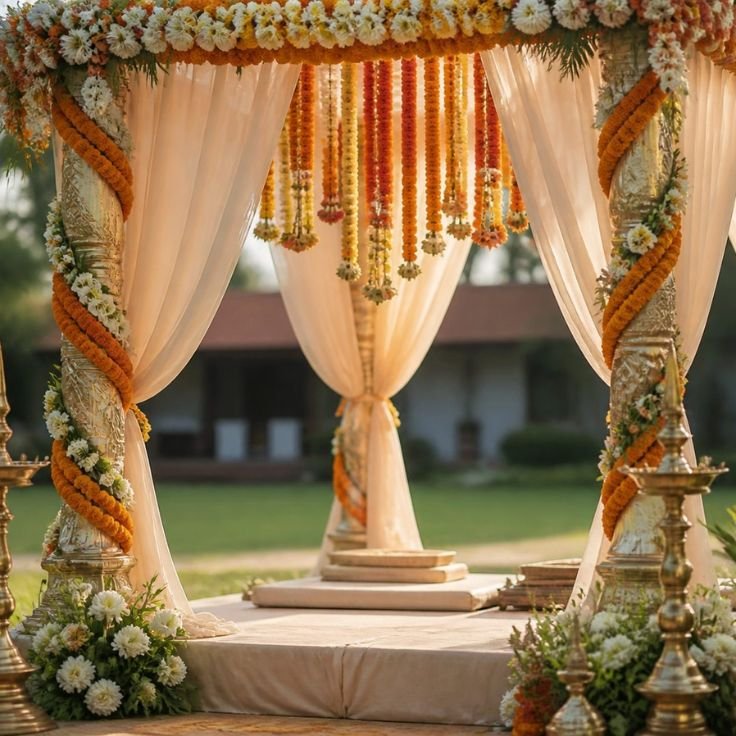
Wedding ceremony & reception
A lawn mandap for the daytime pheras and an open-air reception in the evening use the same ground differently — confirm with the venue how the layout shifts between the two.
Sohna · Farmhouse Weddings & Planning
A farmhouse wedding in Sohna gives you something a hotel ballroom cannot: open sky, a green lawn and the low Aravalli hills as your backdrop, at a setting your guests can reach easily from Gurgaon, Faridabad and the rest of south Delhi NCR. Instead of one fixed hall, you get grounds you can arrange your way — a mandap under the open sky, dinner under the lights, and functions that spread across a day or a weekend instead of being squeezed into a single slot.
This guide is written for families who are actively planning. It explains what farmhouse venues in and around Sohna can and cannot do, how to judge capacity and catering before you pay an advance, what each season does to an outdoor celebration, and where the real cost differences sit.
For couples who want an open-lawn celebration close to Gurgaon, yes — the Sohna belt combines greenery and hill views with the flexibility of private venues. The trade-offs to plan for are weather backup, guest rooms and travel time for guests, all of which this guide covers below.
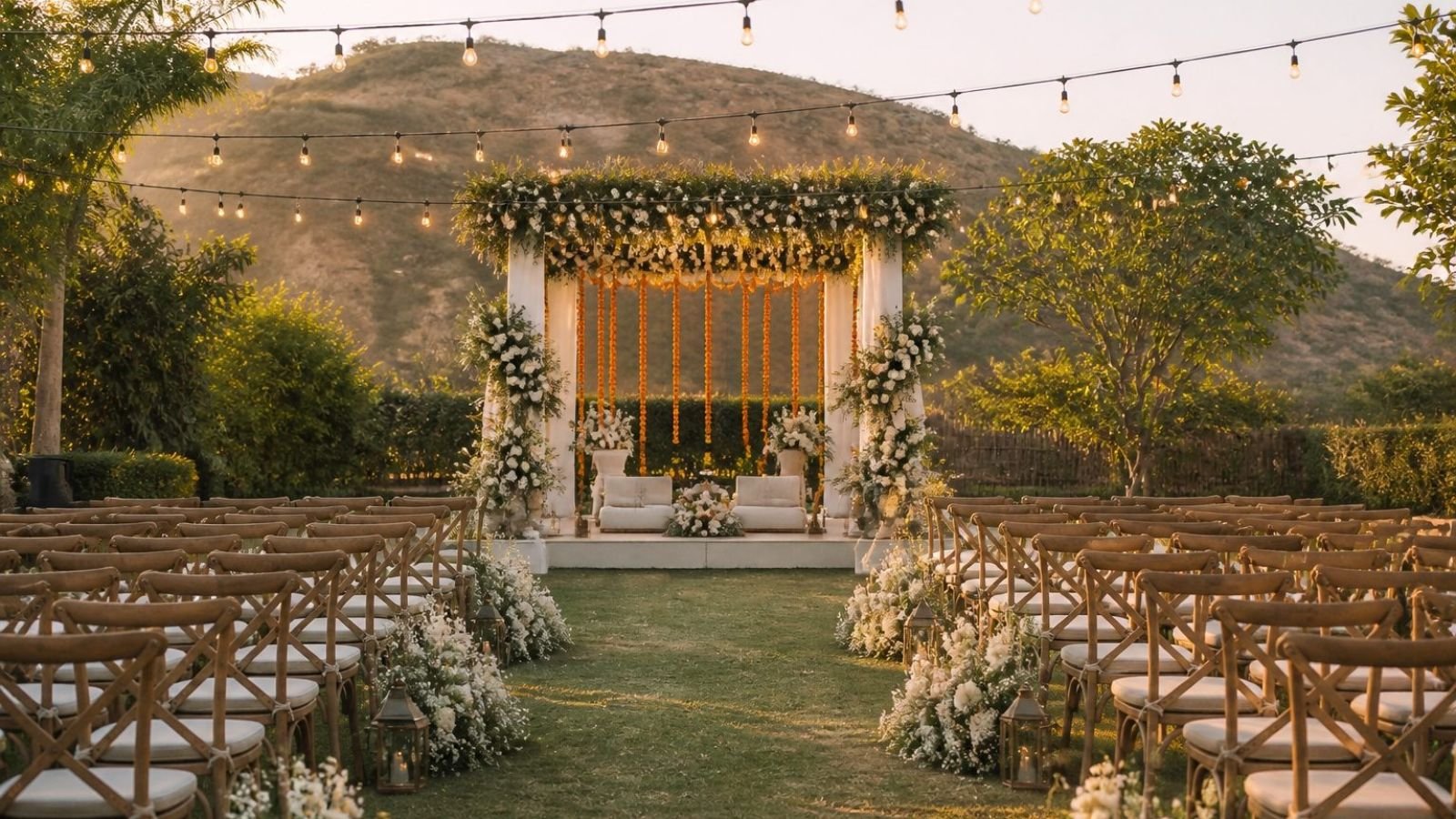
Why Sohna
Sohna, Haryana sits at the edge of the Aravalli hills, just south of Gurgaon. The belt around the town is a mix of farmhouse plots, resorts and open grounds — which is exactly why it works for weddings that need outdoor space without losing the convenience of the NCR.
Functions & celebrations
An Indian wedding is rarely one event. The usual sequence — ceremony, reception, mehndi, haldi, sangeet and engagement — needs different spaces at different times of day, and this is where a farmhouse layout earns its keep.
A lawn mandap for the daytime pheras and an open-air reception in the evening use the same ground differently — confirm with the venue how the layout shifts between the two.
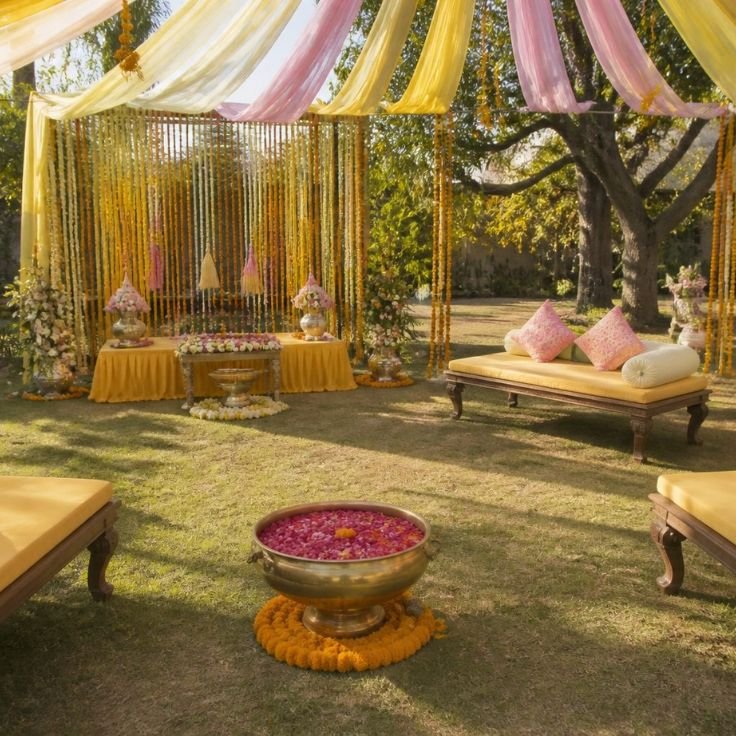
Daytime, casual and messy by design. Shaded lawn seating, washrooms close by and a garden corner that survives turmeric and marigold matter more than formal decor here.
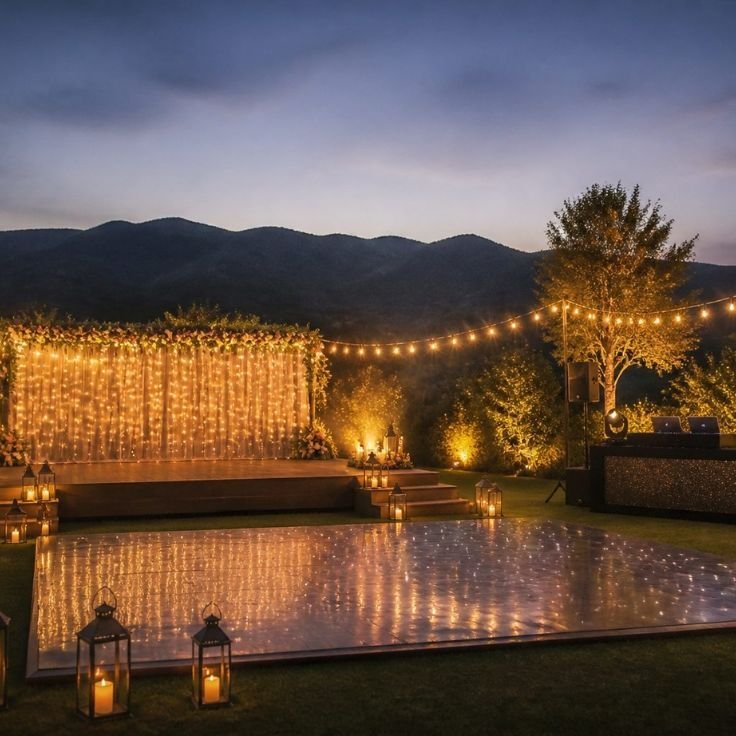
A stage, a dance floor and a DJ setup all run on the venue’s power. Ask where loud music is allowed and until what time — local sound rules apply to open farmhouses too.
Ring ceremonies suit a compact lawn or terrace with a small stage and seated dinner. Smaller guest lists give you more choice of dates and venues within the belt.
A close-family wedding uses a farmhouse well: privacy, flexible timings, and family staying on the property instead of commuting between a hall and a hotel.
The lunch after the wedding, a poolside brunch for outstation relatives or a farewell breakfast — farmhouse grounds absorb these extra functions without extra venue hires.
Venue checklist
A venue that photographs well is not always the one that performs on the day. Weddings put pressure on the unglamorous things — parking, washrooms, shade, power and the walk from the car to the seating. Judge every property on the points below before you judge its decor.
Open-air setups
Outdoor space is the whole point of a farmhouse wedding, but each function uses the open ground differently depending on the hour and the month.
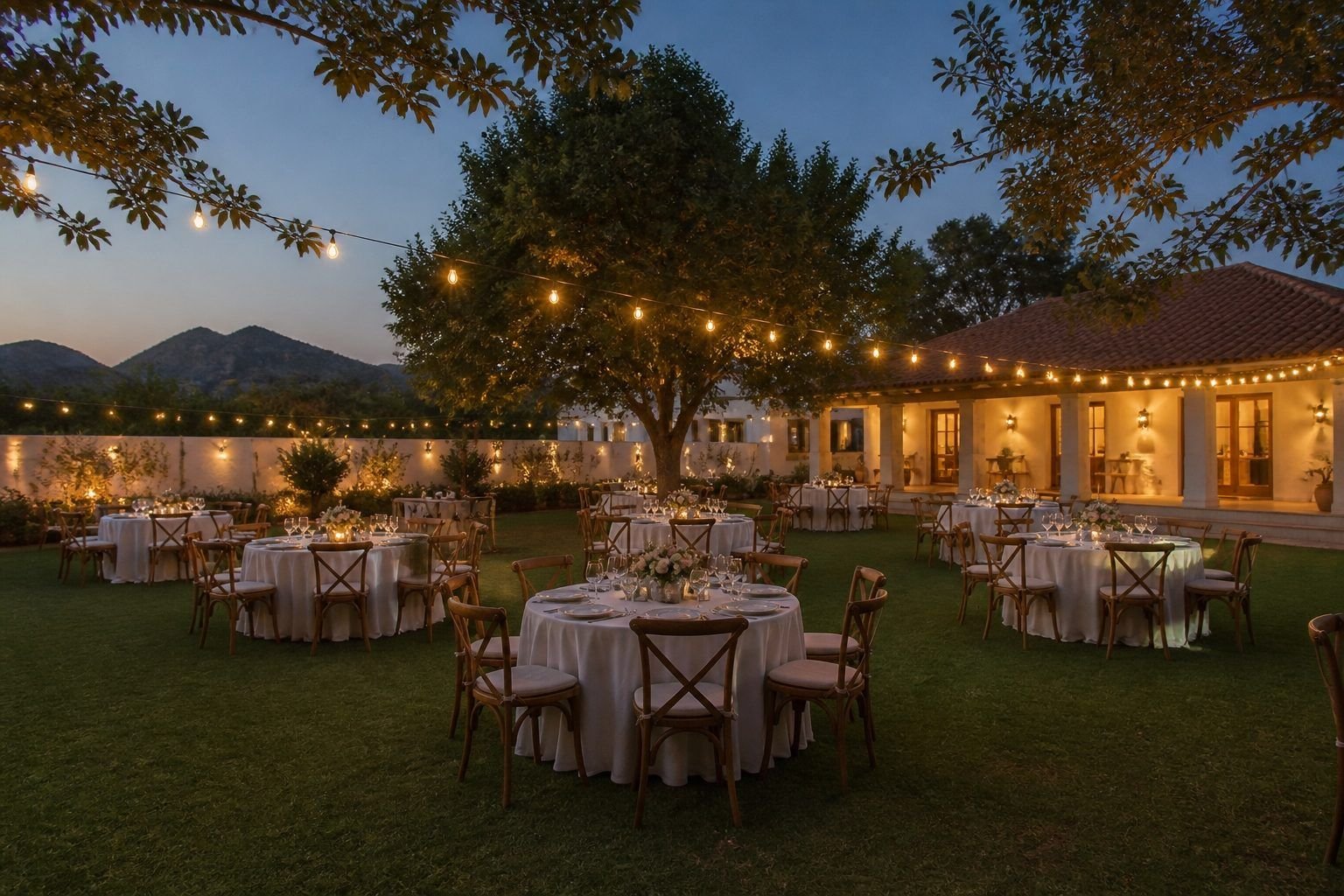
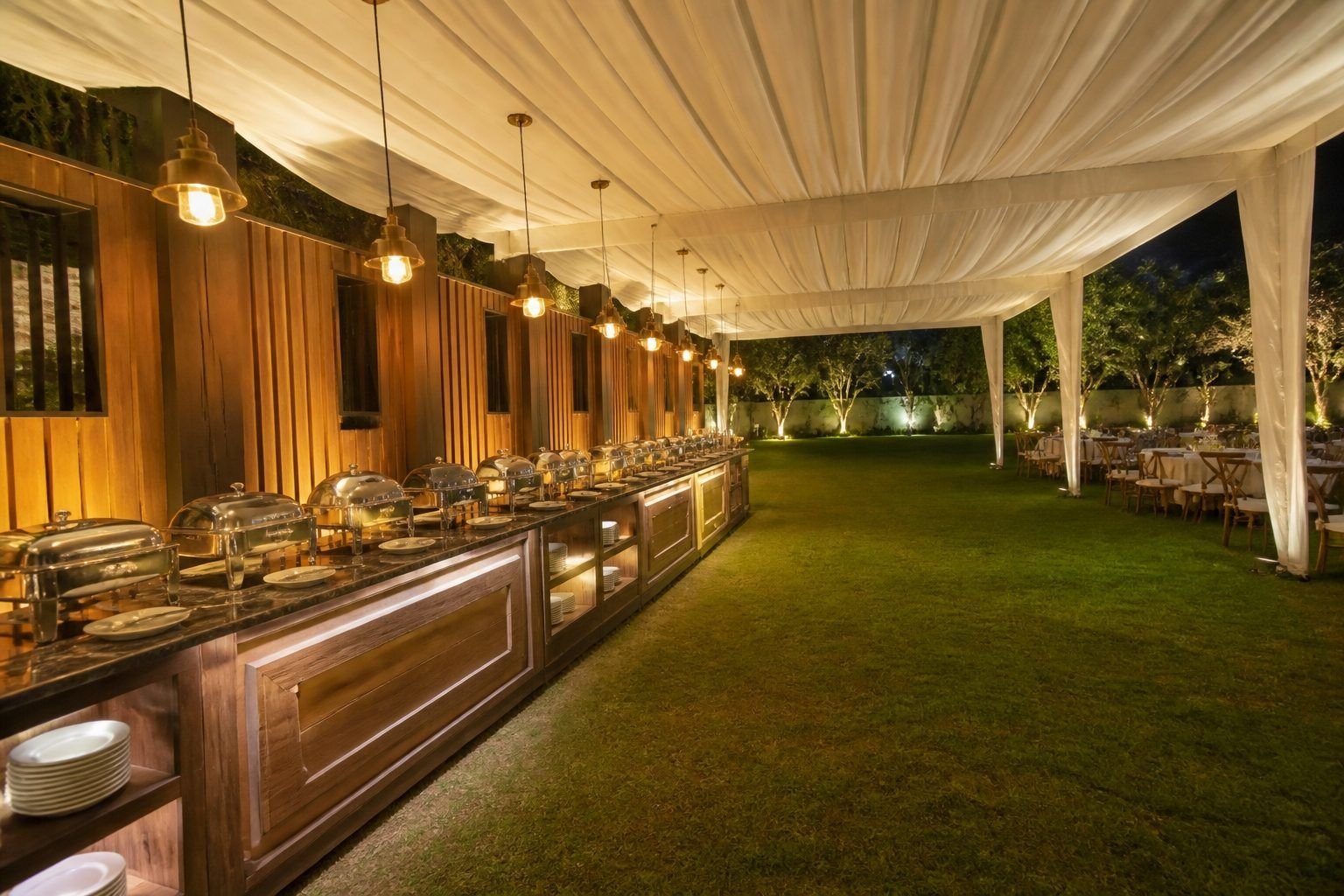
Mehndi and haldi sit naturally in the morning, when the lawn is usable and the light is good for photographs. Day weddings work best between October and March; in the hotter months a daytime function needs full tenting, air-coolers and a hydration counter, and even then it asks a lot of guests in formal wear.
Evenings are when farmhouse lawns look their best — string lights, lanterns and an open sky do most of the decor work. Winter evenings after sunset turn cold, so plan heaters, a warm indoor dining option or shawls for guests, especially for December and January dates.
A sangeet on the lawn needs stage lighting, generator-backed power and a clear music cut-off time agreed in advance. Farmhouses outside the town's built-up areas usually have more tolerance for volume, but the venue's own rules and local sound norms decide — confirm both in writing.
Practical rule: whatever the season, keep one covered or indoor space that fits your guest list reserved in the plan. It is cheaper as a standby than as an emergency.
Step-by-step planning
Ten decisions decide how a farmhouse wedding actually goes. Work through them in this order and most of the last-minute scrambling disappears.
Everything else — lawn size, per-plate budget, room block, parking — hangs on this number. Split it by function, because the sangeet list and the wedding list are rarely the same size.
Peak-season weekends in Haryana book out early. Pick two or three acceptable dates before you start calling venues, and keep the month's weather in mind — a June afternoon function is a different event from a February one.
On your visit, walk the ground: where the mandap goes, where dining lands, how far the washrooms are, and how guests flow from parking to seating. Long walks on gravel in wedding footwear are a real complaint — plan the routes.
Buffet, served dinner or live counters change the space you need as much as the budget. Confirm the water and beverage plan for summer dates, and get the menu tasting done with the actual wedding menu.
Afternoon sun punishes open mandaps; evening events reward lighting. Decide decor intensity by the hour of each function, not by the catalogue.
If the farmhouse has rooms, block them early for immediate family. Everyone else needs a nearby hotel list — Gurgaon covers this well — with clear driving directions to the venue.
Good photographers fill winter weekends months ahead. Farmhouse weddings give them natural light and open backdrops; walk the property with them once and agree on the shot locations and timings.
Check the sound system's power source, the stage position relative to the elders' seating, and the venue's music cut-off rule. These three details prevent the most common sangeet-night friction.
Ask how many cars fit inside, where overflow goes, and whether the approach road handles buses. If the last stretch is a narrow village road, plan marshals or signage from the main highway.
For every outdoor plan, confirm the covered alternative, its cost, and who decides to shift and by when. Agree on this before the advance, not during the shower.
Season guide
North India's wedding calendar follows its weather, and Sohna is no exception. Every season can work — each just needs different planning.
The prime window. Warm days, cool evenings and lawns that have recovered from the monsoon. The most in-demand weekends of the year sit here, so venues and vendors book out first.
Pleasant daylight functions, but nights turn genuinely cold. Outdoor dinners need heaters, and an indoor or enclosed dining option is worth having for elders and children.
Comfortable spring weeks with good light for photography. Dates around festivals and exam season move fast, so confirm availability early even within these months.
Very hot afternoons. Weddings in these months work as evening and night events with full tenting, air-coolers and shaded dining. Venues are more available and often negotiate harder for these dates.
Monsoon months: the belt turns its greenest, but rain risk is real. A covered mandap option, covered walkways and a hard indoor fallback are the price of these lush dates.
Budgeting
No honest answer is a single number. Farmhouse wedding costs here are built up from several parts, and two weddings at the same venue can sit far apart on price.
Venue listings online often quote starting per-plate rates that change with the menu, the date and the guest count — treat them as a filter, not a quote. The reliable method is to shortlist two or three properties and ask each for an itemised estimate for the same date and the same guest count, then compare what each package includes and excludes.
Choosing process
A short, structured process beats seeing a dozen properties. Most families can decide in three venue visits if the calls before the visits are done properly.
Filter by realistic guest count and date availability, not by photographs alone.
Use the venue checklist above on the phone itself. If a venue will not share capacity, catering policy and room counts on a call, that is an answer too.
Walk the lawn, the hall, the kitchen and the parking. Photograph the washrooms and the approach road — you will forget which property had which problem.
Same date, same guest count, same format. Line up inclusions and exclusions side by side before looking at the totals.
Ask to see photos from a recent wedding at the property — it shows how the lawn and lighting actually behave, not how they look in the brochure.
Advance, balance schedule, cancellation, date-change and the confirmed inclusions, all in writing. Reconfirm the arrangement with the venue about two weeks before the date.
Comparison
Neither format is universally better — they optimise for different things. The honest comparison looks like this.
| Aspect | Farmhouse wedding | Hotel wedding |
|---|---|---|
| Privacy | Exclusive use of the grounds in most cases; one wedding at a time. | Multiple events may run in adjacent halls, especially in season. |
| Space & layout | Open lawns, gardens and terraces you can arrange freely. | Fixed halls with standard stage and seating layouts. |
| Customisation | High — decor, timings and vendor choice are often flexible. | Structured — in-house teams, set timings, approved vendor lists. |
| Outdoor setup | The natural format: mandap, cocktails and sangeet in the open air. | Limited to terraces or poolside areas, where available. |
| Accommodation | Rooms on site at larger properties; nearby hotels cover overflow at smaller ones. | Rooms within the same building, usually very convenient. |
| Catering | Often open to outside caterers; policies vary by property. | Usually in-house catering with fixed menus and packages. |
| Budget factors | Venue rent, per-plate and vendor costs that you control line by line. | Package pricing with fewer moving parts to manage. |
| Event format | Suits multi-function weddings spread across a day or a weekend. | Suits single-day, centrally managed events. |
A useful rule of thumb: if your wedding is a series of functions with family staying over, a farmhouse gives the format more room. If it is one large evening with guests arriving straight from the city, a hotel's structure starts looking sensible.
Around Sohna
Wedding planning in this belt rarely stops at one pin code. If the exact farmhouse setup you want is not available on your date, these neighbouring areas are worth checking — each has its own venue mix, and none is more than a short drive from the others.
Common questions
Start with the practical points: seated capacity for your actual guest list, a lawn and an indoor hall of the right size, parking close to the entrance, enough washrooms, power backup, and guest rooms if family is staying over. Then ask about catering and decoration rules, the music cut-off time, and the advance and cancellation terms. Get each answer in writing before you pay anything.
It varies a lot from property to property — some farmhouses suit a close-family function while larger estates and farmhouse resorts handle big receptions with a stage, dance floor and buffet counters. What matters on the day is seated capacity, not the headline number. Ask the venue to confirm how many guests can sit at rounds once the stage, dance floor and food counters are placed.
Yes, and that is where a farmhouse usually beats a single banquet hall — the lawn, terrace and garden can run as separate spaces for daytime functions and the evening sangeet. Check that the venue allows functions across the full day, ask where loud music is permitted and until what time, and confirm whether a DJ or outside vendors carry any extra charge.
Yes. Outdoor and lawn weddings are the main reason couples shortlist Sohna — the open ground, greenery and hill backdrop are difficult to recreate inside a hotel ballroom. Plan around the weather all the same: summer afternoons need shade and cooling, monsoon weeks need a covered or indoor fallback, and winter evenings need heaters or shawls for guests.
October to March is the most comfortable window — days are pleasant and evenings are cool. December and January can turn quite cold after sunset, so plan heaters or a warm indoor space for night functions. April to June is very hot and works best for evening events, while the monsoon months need a dependable indoor backup plan.
There is no fixed number — the final cost depends mainly on your guest count, the venue and the date, the food package, decoration scale, room nights for outstation guests and entertainment. Peak-season weekends usually cost more than weekday dates. The simplest way to budget is to collect itemised quotes from two or three venues for the same guest count and date, then compare what each package actually includes.
Very much so. A smaller guest list is often where a farmhouse works best — you get privacy, flexible timings and the whole outdoor space to yourselves, and family can stay on the property instead of travelling between a hall and a hotel. Ask about minimum-guest or minimum-spend rules, since some venues price small functions differently.
The popular winter weekends go first, so start shortlisting as early as you can — several months ahead for a peak-season Saturday is a sensible rule of thumb. Off-season and weekday dates are usually easier to book at shorter notice. Whenever you book, confirm the date-change and cancellation terms in writing at the same time.
Next step
Shortlisting for a date? Note your guest count and preferred month, browse the venue guides above, and send us an enquiry — we will point you to the pages and options on this site that match.