01
Gurgaon (Gurugram)
Just 15 km from the park, Gurgaon brings together malls, restaurants, museums and city comforts — an easy urban contrast to a morning of bird watching.
Explore Gurgaon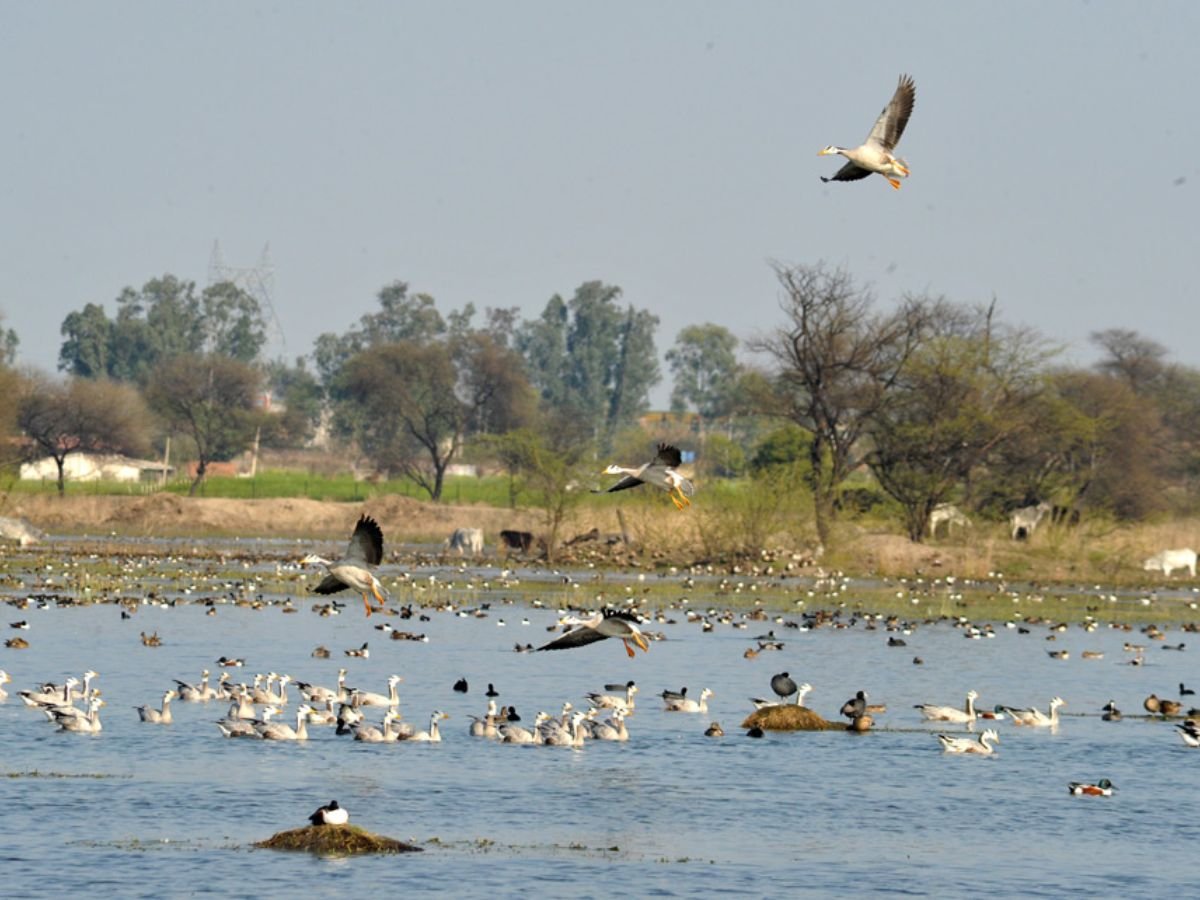
Sultanpur National Park is a Ramsar-listed bird sanctuary about 15 km from Gurgaon, famous for its winter migratory birds and easy walking trails. Here is everything you need to plan a visit — the best season, timings, entry information, how to reach from Delhi NCR and what to expect on the ground.
Sultanpur National Park is a bird sanctuary and Ramsar-listed wetland in Gurugram district, Haryana — about 15 km from Gurugram city, roughly 25 km from Manesar and around 50 km from Delhi. It is one of the best places in Delhi NCR to watch birds: more than 250 species have been recorded here, including large numbers of migratory ducks, geese, pelicans and storks that arrive every winter. With flat walking trails, watchtowers and hides, it is an easy and rewarding half-day trip for families, walkers and bird photographers.
Sultanpur National Park protects a shallow wetland (locally called Sultanpur Jheel) and the grassland and tree cover around it, in the Gurugram district of Haryana. The site was a favourite of the ornithologist Dr Salim Ali, whose campaigning helped bring it under protection: it was declared a bird sanctuary in 1971, upgraded to a national park in 1991, and recognised as a Ramsar wetland of international importance in 2021 — the first in Haryana. Birders still informally remember it as the Dr Salim Ali Bird Sanctuary, and a bust and exhibits inside the park commemorate him.
What makes the park special is how close it is to the city. Within half an hour of Gurugram you can be standing at a watchtower watching pelicans, storks and thousands of ducks on the water. The protected area covers roughly 142 hectares, much of it a shallow lake fringed by reeds and acacia trees, with a well-shaded walking circuit around it. Facilities are simple — an interpretation centre, watchtowers, hides and a walking trail — and the experience is all about quiet observation rather than entertainment.
Bird watching is the whole point of a visit here. More than 250 species of resident and migratory birds have been recorded at Sultanpur over the years, and the mix changes with the seasons. In winter, the wetland fills up with ducks and geese such as bar-headed geese, northern pintail, Eurasian wigeon and common teal, along with pelicans, cormorants and — in good years — greater flamingos. The park is also known for its Painted Storks, which nest here in the colder months.
Resident birds keep the park lively through the year: grey-headed swamphens stalk the reed beds, white-throated kingfishers and bee-eaters perch along the trail, and red-wattled lapwings, egrets and Indian peafowl are almost always around. Rarer sightings reported by birders include the sarus crane and the black-necked stork. Keep an eye on the ground too — nilgai (blue bull) are among the animals sometimes seen here.
The best way to see the birds up close is from the park's watchtowers and observation hides, which look out over the water. Mornings are usually the most active time, so arriving soon after opening gives you the best chance of good sightings and better light for photography.
November to February is the best time to visit Sultanpur National Park. This is peak migratory season, when the wetland is at its fullest and the weather is pleasant for walking. October to March is generally a good stretch overall, and early mornings in these months offer the best birding.
Summers (April to June) are hot and quiet, with far fewer birds, and the park has in recent years closed to visitors during the monsoon from 1 June to 30 September to let the wetland rest and recharge. Because this closure can change from year to year, it is worth checking the current status with the Haryana Forest Department or Haryana Tourism before you travel. A winter visit also pairs beautifully with a drive to Damdama Lake, another good water-and-birds spot on the Gurugram side.
Timings and charges at Sultanpur have stayed fairly stable in recent years, but they are revised from time to time — treat the figures below as the usual pattern, not a guarantee, and confirm current details before your visit.
| Item | Usual detail |
|---|---|
| Opening hours | Roughly 7:00 am to 4:30 pm |
| Weekly holiday | Closed every Tuesday |
| Annual closure | In recent years, closed 1 June – 30 September (monsoon); check current status |
| Entry fee | A modest ticket, charged per person; fees differ for Indian and foreign visitors and are revised from time to time |
| Camera fee | A separate, small charge applies to cameras (DSLRs cost more than phones) |
| Time needed | About 2–3 hours for a relaxed visit |
Entry fees, camera charges and timings are set by the Haryana Forest Department and can change. Check the Forest Department or Haryana Tourism websites for the latest figures before you set out.
The park sits on the Gurgaon–Farrukhnagar road (State Highway 15A), just off the western side of Gurugram, which makes it one of the easiest nature outings in Delhi NCR by road.
| Mode | Detail |
|---|---|
| Car / taxi | The easiest option. From Gurugram it is about 15 km via Basai Road onto the Gurgaon–Farrukhnagar road. From Delhi, take NH-48 towards Gurugram and follow signs for Sultanpur; the drive from south and central Delhi usually takes about 1.5 hours depending on traffic. |
| Bus | Local buses on the Gurugram–Farrukhnagar route stop at Sultanpur village, from where the park entrance is a short walk or shared-ride away. |
| Metro + taxi | Take the Delhi Metro Yellow Line to a terminal station in Gurugram (such as Huda City Centre), then continue by cab or auto for the remaining road distance. |
| Air | Indira Gandhi International Airport (Delhi) is the nearest airport, roughly 40–50 km away depending on the route. |
App-based cabs are readily available from Gurugram for the short hop, and there is parking near the entrance for those driving down.
Sultanpur National Park is about 15 km from Gurugram city — usually a 30-minute drive. The typical route runs via Basai Road onto the Gurgaon–Farrukhnagar road (SH 15A), and the park entrance is well signposted once you reach Sultanpur village.
Leave after an early breakfast to reach by opening time, walk the main trail and the watchtowers through the morning, and you can be back in Gurugram by lunch. Combine it with the wider attractions of Gurgaon — shopping, cafés and the Heritage Transport Museum is also on this side — to turn it into a full day out.
From Manesar, the park is roughly 25 km away — about a 45-minute drive — usually via the Western Peripheral Expressway (KMP) or through Gurugram. That makes it one of the easiest nature escapes from Manesar, and it fits comfortably into a half-day plan.
Because the park is best in the early morning, the classic plan from Manesar is a sunrise start, two to three hours of bird watching, and a late lunch back in town. If you are staying in one of the resorts in and around Manesar, ask your hotel about arranging a taxi — drivers in the area know the route well.
Sultanpur sits on Haryana's NCR fringe, so it pairs easily with several other destinations in the region. These are the spots worth adding to the same trip.
Just 15 km from the park, Gurgaon brings together malls, restaurants, museums and city comforts — an easy urban contrast to a morning of bird watching.
Explore GurgaonA scenic lake on the Gurugram–Sohna side, popular for boating, picnics and Aravalli views — a good second stop on a nature-focused day trip.
Explore Damdama LakeA small heritage town further along the same road as the park, known for its fort gateway, Shekhavati-style havelis and old baoli.
Explore FarrukhnagarAn Aravalli foothill town known for its sulphur hot springs, hill fort and the views over Damdama Lake — a relaxed half-day destination.
Explore SohnaA fast-growing town along NH-48 with resorts, farmhouses and day-out venues — a convenient base about 45 minutes from the park.
Explore ManesarA historic town with railway heritage, traditional havelis and old bazaars — a worthwhile detour if you are exploring deeper into Haryana.
Explore RewariMost people visit Sultanpur as a day trip, but there are good stay options across the region if you want to slow things down. Gurugram has the widest choice of hotels, while Manesar — about 45 minutes from the park — is known for its resort belt, from 5-star resorts to farmhouses and private villas that work well for families and groups. If you are planning a weekend around the park, budget resorts in Manesar make an easy base for early-morning birding.
Bird watching. This wetland near Gurgaon attracts over 250 recorded species of resident and migratory birds each winter, and it is Haryana's first Ramsar site. It is one of the most popular birding day trips in Delhi NCR.
In the Gurugram district of Haryana, about 15 km from Gurugram city and roughly 50 km from Delhi, on the Gurgaon–Farrukhnagar road. It is also an easy drive of about 25 km from Manesar.
The park has generally been open from about 7:00 am to 4:30 pm and closed every Tuesday, with a modest entry fee and a separate charge for cameras. Fees and timings are revised from time to time, so confirm current details on the Haryana Forest Department or Haryana Tourism websites before your visit.
November to February, when migratory birds such as bar-headed geese, pelicans, flamingos and ducks are present in large numbers. October to March is generally good. The park has in recent years closed during the monsoon from 1 June to 30 September, so check the current status before travelling.
About 15 km — usually a 30-minute drive via Basai Road and the Gurgaon–Farrukhnagar road (SH 15A).
Roughly 25 km, about a 45-minute drive, usually via the Western Peripheral Expressway (KMP) or through Gurugram. It fits easily into a half-day outing from Manesar.
More than 250 species have been recorded here. Winter visitors include bar-headed geese, pelicans, flamingos and ducks such as the northern pintail, while residents include painted storks, grey-headed swamphens, kingfishers, lapwings and peafowl. Sarus cranes and black-necked storks are among the notable species recorded.
Plan for about two to three hours to walk the main trail, spend time at the watchtowers and hides, and see the park at a relaxed pace. Bird watchers and photographers often stay longer, especially on winter mornings.