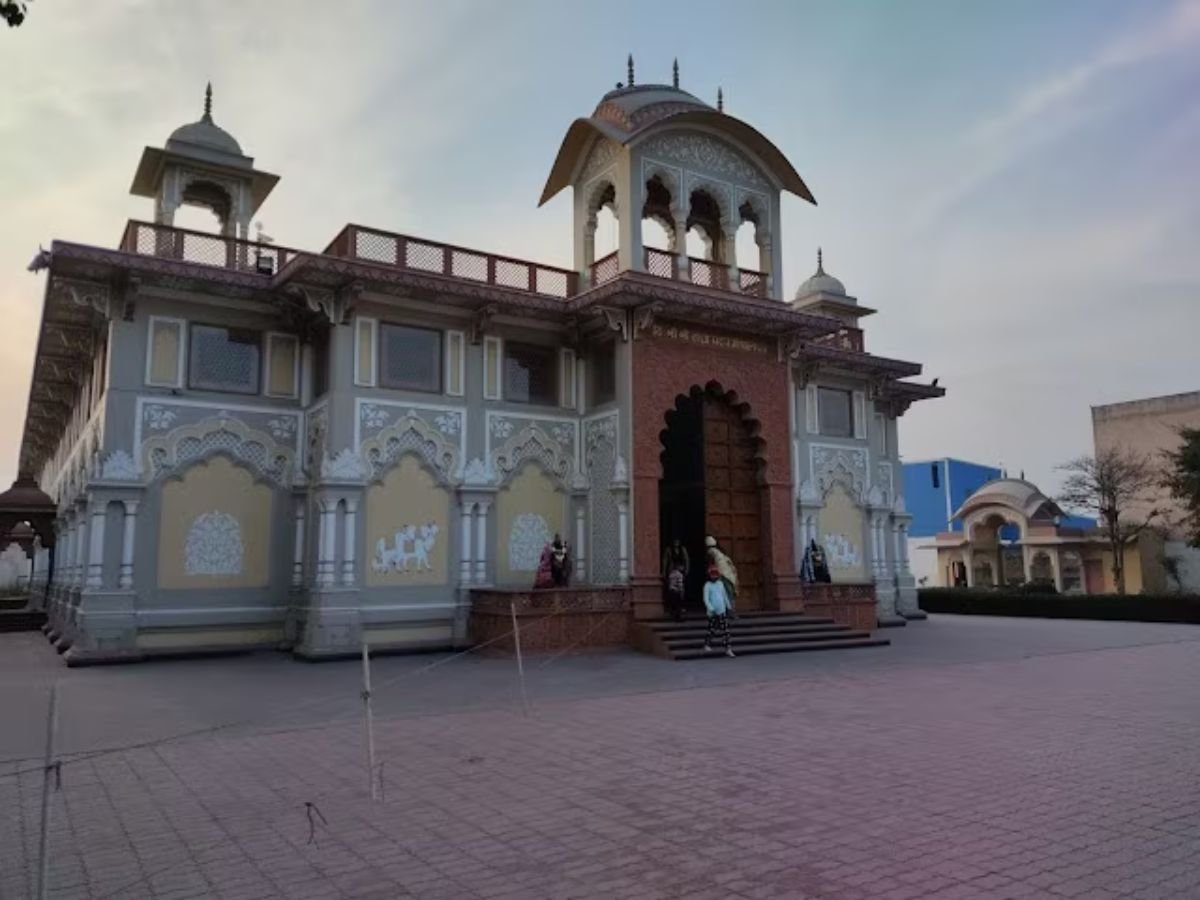
Places to Visit in Bahadurgarh: Attractions, Things to Do & Nearby Places
Bahadurgarh is a city in Jhajjar district, Haryana, on the edge of Delhi NCR — often called the “Gateway of Haryana” because it sits right where the capital meets the state. This guide covers what is actually worth seeing in and around the city, which nearby destinations make a sensible day trip, how to reach Bahadurgarh and how to plan your time.
🏯 Old fort & heritage🚇 Delhi Metro Green Line🚗 Short drive from West Delhi🌾 Jhajjar countryside
🗓️ Information last reviewed: September 2026
What are the best places to visit in Bahadurgarh?
The most-visited places in Bahadurgarh are the old Bahadurgarh Fort with its surviving gateway, the ISKCON temple (Sri Sri Radha Madan Gopal Mandir), the city’s local temples and gurudwaras, and the neighbourhood parks and markets around Sector 6 and Line Par. Bahadurgarh is a compact city rather than a resort town, so most people see the main sights in half a day and then use the city as a base for wider day trips — Jhajjar and Bhindawas Bird Sanctuary, the birding at Sultanpur National Park and the heritage town of Farrukhnagar are the closest worthwhile add-ons.
Jhajjar districtHaryana, in Delhi NCR
“Gateway of Haryana”On the Delhi–Haryana border
PIN 124507Vehicle code HR-13
Metro terminusDelhi Metro Green Line
About Bahadurgarh: a quick overview
Bahadurgarh is a city and municipal council within Jhajjar district in Haryana, and forms part of the National Capital Region (NCR). It sits just across the Delhi border to the west of the capital, which is why it is widely known as the “Gateway of Haryana”. Administratively the city grew out of a settlement founded in the mid-18th century, and much of its identity is still tied to that history plus its position on the old highways into Delhi.
For a visitor, the honest picture is this: Bahadurgarh is a busy, working Indian city rather than a polished tourist destination. There is no theme park strip or resort complex here. What it offers is genuine, low-key sightseeing — a fragmentary fort, a large ISKCON temple, ordinary local markets and countryside all around — and, more usefully, a convenient starting point for exploring the Jhajjar district and the wider NCR. That is exactly how this guide treats it.
If you are searching for a full “things to do in Bahadurgarh” list, it helps to split the options into three: what is inside the city, what is a short drive away, and what is realistically a longer day trip. The sections below follow that order.
Places to Visit in Bahadurgarh
The city’s own attractions are limited and spread across a fairly ordinary urban area, so it is worth knowing what each one actually is before you make the trip. These are the spots that repeatedly come up when people research Bahadurgarh tourism.
1 Bahadurgarh Fort & its gateway
The fort is the town’s historical anchor. Accounts of its construction differ between sources, so it is best treated as an 18th–19th century structure rather than a single fixed date. The most visible surviving element is the old gate or ‘Nakarkhana’, which is the part travellers most often photograph. What stands today is a fragment of the original complex rather than a restored monument, and there is no formal ticketed visitor infrastructure around it.
Go with the right expectation — a piece of living local heritage in the middle of a busy town, not a maintained tourist fort. It suits history-minded visitors and photographers, and needs only a short stop.
Best for: history & heritagePhotographyShort stop
Access, condition and opening arrangements around the fort are informal and can change. Confirm locally before making it the main reason for a trip.
2 ISKCON Bahadurgarh — Sri Sri Radha Madan Gopal Mandir
This is the city’s most prominent temple and by far its best-known visitor stop. It is a large, well-maintained ISKCON centre with a spacious campus, listed at Nahara Nahari Road, Bamnoli Mod, Line Par, Bahadurgarh. It functions as an active temple and Vedic cultural centre rather than a tourist attraction, so the experience is devotional — darshan, kirtan and festivals — and visitors are expected to respect that.
Because it is a working temple, timings and the daily schedule vary. Check the current timings with the temple before you travel, especially if you are planning around a festival.
Best for: familiesSpiritual visitorsCampus is easy to walk
3 Temples, gurudwaras and local landmarks
Beyond ISKCON, Bahadurgarh has the usual spread of local religious and civic landmarks woven into the city — Shiva temples, a Gurudwara, and neighbourhood parks such as the Laxman Dass Batra Municipal Park. These are not destinations in themselves, but they are what a resident would show you, and they give a real sense of the place.
Combine them into a slow walk rather than treating each as a separate attraction.
Best for: unhurried local explorationResidents & repeat visitors
4 Sector 6 market & Line Par — everyday Bahadurgarh
The commercial heart of the city, with shops, street food and the daily market activity that gives Bahadurgarh its character. It is a good place to understand the scale of the city and to pick up snacks. Parking and traffic are typically busy, so plan to park and walk.
This is a genuine “things to do” answer for anyone staying locally: an evening walk through the main market area, rather than a curated attraction.
Best for: food & local cultureEvening stroll
Note on attractions: Bahadurgarh is often confused online with Bahadurgarh Fort in Patiala, Punjab. They are two completely different places. Everything on this page refers to Bahadurgarh in Jhajjar district, Haryana.
Things to Do in Bahadurgarh
The realistic activity list for Bahadurgarh is short and grounded. Think of the city as a half-day stop that you pair with something nearby.
See the fort and the old-town streets around it — a compact heritage walk that takes an hour or so.
Visit the ISKCON temple for darshan and to see the city’s best-maintained public space.
Walk the Sector 6 / Line Par market area, try local street food and see everyday city life.
Spend time in the city’s parks, which are the main green space for families with children.
Pair the city with a birding or picnic destination nearby — Bhindawas, Sultanpur National Park or a Jhajjar-side picnic park.
Use Bahadurgarh as a base for NCR day trips — Delhi’s western edge, Gurugram and the Haryana countryside are all reachable.
Eat locally — the city’s food scene is everyday North Indian and Haryanvi fare rather than destination dining. We do not list individual restaurants here because names and quality change quickly; ask locally on the day.
We have deliberately left out activities that cannot be confirmed as genuinely available around Bahadurgarh, rather than padding this list.
Places to Visit Near Bahadurgarh
Bahadurgarh’s real strength is location. It sits on the western edge of Delhi NCR, so a cluster of very different destinations — bird sanctuaries, heritage towns, big-city attractions and Aravalli countryside — are all within a reasonable drive. Below they are grouped by how far they realistically are and what kind of outing they suit, rather than presented as one flat list.
Very close — short outing from the city
Short drive
Jhajjar
Bahadurgarh’s own district headquarters, reached along the Bahadurgarh–Jhajjar road. Quieter and more rural, it is the natural next stop and the gateway to the district’s heritage and birding sites.
The capital’s western edge is practically next door, and Bahadurgarh is directly connected to the Delhi Metro network. Ideal when you want museums, monuments, markets or dining after the quieter Haryana side.
A small heritage town in Gurugram district with a Sheesh Mahal and an older, slower urban texture. Pairs well with a Sultanpur birding stop on the same day.
Haryana’s best-known bird sanctuary, in Gurugram district and roughly 15 km from Gurugram city. A reliable wetland birding outing, especially in winter.
A small Aravalli-foothill town known for sulphur hot springs, an old hill fort and green surroundings. A nature-and-heritage day trip from the Bahadurgarh side.
Geography check: Bahadurgarh is not close to every destination on a typical “near Manesar” list. Bawal and Neemrana, for example, sit far down the Delhi–Jaipur corridor and are better treated as separate trips from that side of the NCR — so we have not presented them as nearby here. Distances quoted across this page are approximate and based on mapped road routes; always check live traffic before a day trip.
Bahadurgarh to Nearby Destinations at a Glance
A quick reference for planning. “Travel relationship” uses plain language rather than fake precision, because actual drive times swing widely with NCR traffic.
Destinations near Bahadurgarh, with the reason to visit and who they suit
Destination
Why visit
Approx. travel relationship
Ideal for
Jhajjar
District headquarters; base for Bhindawas and local heritage
Short drive on the Bahadurgarh–Jhajjar road
Half-day outing
Bhindawas Bird Sanctuary
Large wetland; winter birding
Short drive beyond Jhajjar (~15 km from Jhajjar city)
Nature lovers, birders
Delhi (west)
Metro-linked city; monuments, markets, dining
NCR day trip
Families, city breaks
Gurugram
Malls, restaurants, urban contrast
Cross-NCR drive
Couples, friends, shopping
Farrukhnagar
Small heritage town, Sheesh Mahal
NCR day trip
History enthusiasts
Sultanpur National Park
Haryana’s best-known bird sanctuary
NCR day trip (~15 km from Gurugram)
Nature lovers, photographers
Damdama Lake
Lakeside picnic and boating
Longer day trip via the Manesar belt
Families, group outings
Sohna
Sulphur hot springs, hill fort, Aravallis
Longer day trip
Nature & heritage lovers
Faridabad
Surajkund and southern NCR
Longer cross-NCR day trip
Craft & culture trips
Rewari
Rail and regional heritage
Full-day trip
History & rail enthusiasts
Dwarka / Noida
City shopping and entertainment
Metro-linked NCR day trip
Friends, couples
Manesar
Resort belt and weekend stays in the Aravalli foothills
Straightforward drive south-west across the NCR
Weekend stays, groups
Bahadurgarh to Manesar is roughly a 45 km road drive, typically one to one-and-a-half hours depending on traffic and route. Treat this as an estimate, not a guarantee.
How to Plan a One-Day Trip Around Bahadurgarh
Because the city itself fills half a day at most, the most rewarding plan is to combine Bahadurgarh with one nearby destination. Here is a realistic structure.
Morning — the city coreA short walk through the old-town area around the fort gateway, then the Sector 6 / Line Par market streets while they are still calm.
Late morning — ISKCON templeDarshan at Sri Sri Radha Madan Gopal Mandir. Allow roughly an hour, and check the temple’s current timings in advance.
Lunch — in the cityBahadurgarh has everyday North Indian and Haryanvi eateries around its main markets. We do not name specific restaurants because closures and quality change quickly — pick from a busy, well-lit place near the market area.
Afternoon — one nearby destinationChoose based on your interest: head towards Jhajjar and Bhindawas for birding, towards Farrukhnagar and Sultanpur National Park for heritage plus a wetland, or into Delhi’s western side if you want city attractions.
Evening — return or stayDrive back into Delhi NCR, or if you want a slower end to the day, continue towards the Manesar–Aravalli belt and break the journey with an overnight stay.
Rail and metro connections make the city reachable without a car, but the nearby nature and heritage destinations on this list really do need a vehicle. Plan the day-trip portion around that.
Best Time to Visit Bahadurgarh
Bahadurgarh sits on the Haryana plains in the NCR, so its seasons follow the standard north-Indian pattern. There is no monsoon-proof or climate-controlled sightseeing here — the weather genuinely shapes what you can do.
October to March — the best window. Cool, dry and comfortable for walking the fort area and markets, and the peak period for birding at Bhindawas and Sultanpur. December and January mornings can be foggy, which affects early drives.
Late February to March — a strong shoulder season. Pleasant temperatures and good light for photography before the heat builds.
April to June — hot. Daytime temperatures on the plains regularly climb well past 40°C. If you must travel now, keep sightseeing to early morning and late evening and plan indoor or metro-linked city activities.
July to September — monsoon. Humid, with heavy rain spells and occasional waterlogging on roads. The countryside is green and the wetlands fill up, but outdoor day trips are less reliable.
Seasonal guidance is general for the Haryana/NCR plains. Check the forecast and road conditions close to your travel date.
How to Reach Bahadurgarh?
By metro (usually the easiest option from Delhi)
Bahadurgarh is on the Delhi Metro’s Green Line, which extends past the Tikri Border into Haryana. Bahadurgarh City and Brigadier Hoshiar Singh are the two stations serving the city, with Brigadier Hoshiar Singh acting as a terminus station at Bahadurgarh City. The Green Line runs largely along the NH-9 / Rohtak Road corridor, and historically it connected to the rest of the network via an interchange at Inderlok and Kirti Nagar, so an interchange is usually part of the journey if you are coming from central or south Delhi. Confirm current routes, first and last train times with the DMRC before you travel, as services and interchange arrangements change.
By road
The city sits directly on Delhi’s western border and is reached from the capital along the Rohtak Road / NH-9 corridor. From most of Delhi’s western and north-western areas the drive is short. Traffic on this corridor is heavy through the day, so build in buffer time.
By train
Bahadurgarh has its own railway station, but we could not verify current passenger services against an official Indian Railways source, so treat train travel as a “check before you plan” option rather than a dependable one.
From Delhi
Use the Metro if you are going only to the city, and drive if you intend to continue to Jhajjar, Bhindawas or the Manesar belt.
From Gurugram or Manesar
This is a cross-NCR road journey rather than a direct one. Bahadurgarh to Manesar is approximately 45 km and typically takes about one to one-and-a-half hours by road, depending on the route and traffic.
Who Can Visit Bahadurgarh?
Bahadurgarh works for some kinds of travellers much better than others. Here is an honest breakdown.
Families
Suits families based locally or in west Delhi looking for a simple day out — temple visit, parks and market food, without a long journey.
Couples
Best as a quiet half-day city stop paired with a longer NCR outing rather than a destination in its own right.
Friends & groups
Practical for a road trip that continues on to a picnic or resort spot in the Jhajjar or Manesar direction.
Nature lovers
The city itself is urban; the value is proximity to Bhindawas Bird Sanctuary and Sultanpur National Park.
History & culture
The fort remains, the old-town lanes and local institutions give a genuine sense of the region’s layered past.
Delhi-NCR weekenders
Useful as a starting point or a stop on a wider weekend loop through Haryana, rather than the weekend destination itself.
Corporate & group travellers
Relevant mainly for proximity and road access; for hosted group stays and events, the Manesar belt is better set up.
Bahadurgarh Travel FAQs
The main ones are the old Bahadurgarh Fort and its surviving gateway, the ISKCON temple (Sri Sri Radha Madan Gopal Mandir), the city’s local temples and gurudwaras, and the parks and markets around Sector 6 and Line Par. The city’s own sights are compact, so most visitors see them in half a day.
Walk the old-town area around the fort, visit the ISKCON temple, explore the Sector 6 / Line Par market, spend time in the city parks, and pair the visit with a nearby birding or picnic destination such as Bhindawas or Sultanpur National Park.
Yes, but as half of a day rather than a full day. The city’s attractions take a few hours. It works best when combined with one nearby destination — Jhajjar and Bhindawas, Farrukhnagar and Sultanpur, or Delhi’s western side.
Jhajjar and Bhindawas Bird Sanctuary are the closest options. Within a couple of hours you can reach Delhi, Gurugram, Farrukhnagar, Sultanpur National Park, Damdama Lake, Sohna, Faridabad, Noida and Dwarka. Rewari is a longer day trip.
The ISKCON temple and the city parks work well for families, as do the lakeside picnic spots in the Manesar belt such as Damdama Lake. Sultanpur National Park is a good family outing for children interested in birds.
For a full weekend, travellers usually head towards the Aravalli foothills around Damdama Lake and Sohna, or towards the Manesar belt where there are resorts and farmhouse stays. Bhindawas and Sultanpur suit a single morning of birding rather than a whole weekend.
Bahadurgarh sits right on Delhi’s western border, so it is one of the closest Haryana cities to the capital — a short drive from most of west and north-west Delhi. Exact distance and drive time depend entirely on where in Delhi you start.
The Delhi Metro Green Line serves Bahadurgarh City and Brigadier Hoshiar Singh stations, which is usually the simplest option. By road, the city is reached along the Rohtak Road / NH-9 corridor. Check current DMRC routes and timings before travelling.
For nature, Bhindawas Bird Sanctuary and Sultanpur National Park. For heritage, Farrukhnagar and Rewari. For city experiences, Delhi and Gurugram. For a lake outing, Damdama Lake in the Manesar belt.
Yes, both are realistic day trips by road across the NCR. Sultanpur National Park is in Gurugram district, about 15 km from Gurugram city, so the two combine naturally into one outing.
Yes — the city is widely called the “Gateway of Haryana” because of its position on the Delhi border, and it is an established industrial and manufacturing centre in the NCR, not only a residential town.
October to March is the most comfortable window for sightseeing and for birding at the nearby wetlands. April to June is very hot, and July to September brings monsoon humidity and rain.
Planning a Stay Near Bahadurgarh?
Most of Bahadurgarh’s best outings — Damdama Lake, Sohna, the Aravalli foothills — sit on the Manesar side of the NCR. If your itinerary includes those, staying in the Manesar belt means shorter drives and a slower end to the day instead of a long ride back into the city. It is not the only option; it simply depends on where the rest of your trip is heading.